
This domain includes emotional and behavioral skills, and refers to the development kids go through during which they begin to understand who they are, what they are feeling, and what to expect when interacting with others. In this domain, kids learn confidence and empathy, grow their self-concept, develop relationships, and learn to manage emotions.
Watching children grow is one of the many joys of life. As they grow, your children will experience physical, cognitive, and social-emotional milestones, which will help you recognize the different stages they have reached or passed. You’ll be surprised at how much they learn and change in such a short time!
Emotional and behavioral skills are essential to making connections with others and with the environment. They are also important for developing self-confidence! Social-emotional milestones will involve building relationships, working through emotions, and developing your kids’ self-concept.
Remember – kids develop at their own unique pace, so use these milestones as general guidelines.
Milestones to Look for
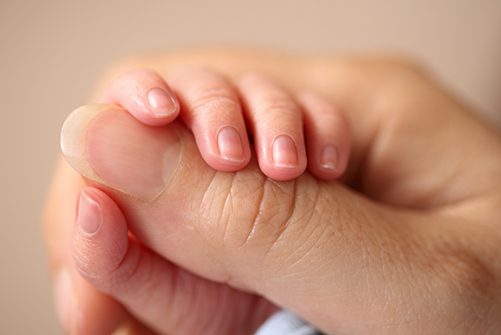
Birth to 3 months
- Recognizes faces, touch, voices, and smell.
- Relies on you to respond to signals and provide comfort.
- Comforted by cuddling or caregiver’s touch.
- Calms with experiences such as rocking and calm sounds.
- Does not have frequent or long bouts of being upset.

3 to 6 months
- Plays “peek-a-boo.”
- Plays with fingers and toes.
- Uses smiles and laughter to appreciate playtime.
- Enjoys a variety of movements.
- Brings hands and objects to mouth.
- Raises hands to be picked up.
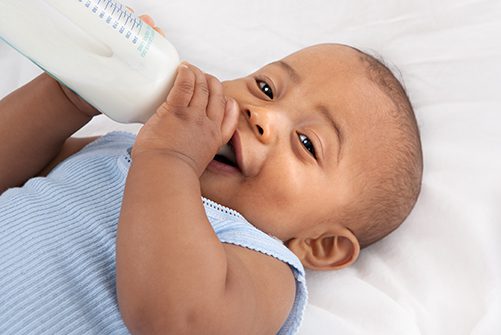
6 to 9 months
- Expresses taste preferences.
- Smiles at his or her reflection in a mirror.
- May love meeting new people—or may be shy at first.
- May like lots of sound and activity—or may prefer quiet and calm.
- Shows displeasure at the loss of a toy.
- Starts to understand your different emotions (they might frown when you speak in a tone of voice that is upset).
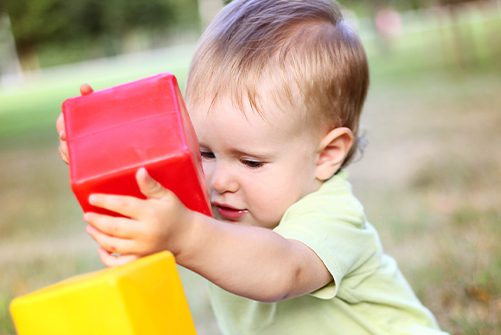
9 to 12 months
- Says a few words like “mama” and “dada.”
- Cries when you leave.
- Reacts to changes in established routines by fussing, crying, or showing discontent.
- Knows the difference between strangers and family.
- Gives affection and love.
- Imitates some of your actions such as talking on the phone.
- Maintains eye contact during playful situations.

12 to 15 months
- Says “no”—or tries to do things without your help.
- Repeats behaviors to get attention—like banging, vocalizing, etc.
- Copies other children playing.
- Hugs stuffed animals, dolls, and other toys.
- Claps when excited.
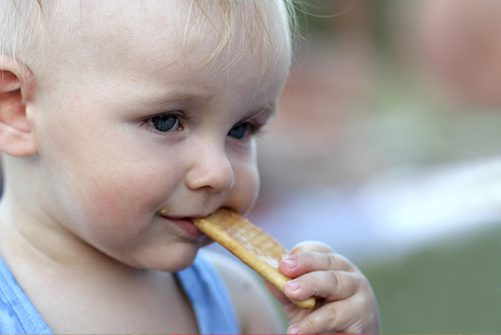
15 to 18 months
- Comforts others or tries to make them laugh with sounds and actions.
- Has difficulty handling feelings.
- Looks to caregiver for help and for cues about behavior.
- Has developed strong attachments to caregivers; gives you lots of kisses and hugs.

18 to 24 months
- Understands “no”—but may have trouble controlling feelings and actions.
- Wants to do things independently.
- Notices likeness and differences between self and others.
- Is able to play in social situations after a transition time.
- Is usually able to self-calm to fall asleep or during a car ride when they aren’t tired or hungry.
- Acts like they own certain objects.
- Enjoys playing alone for short periods of time.
- Begins to think about how they feel and may link feelings to words like “sad” and “happy.”
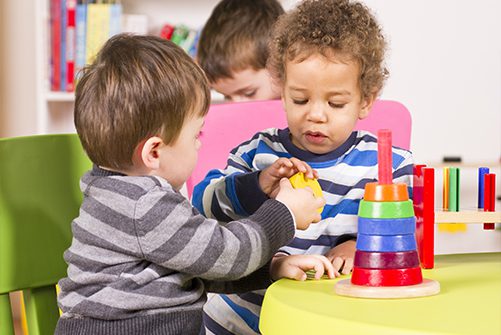
24 to 30 months
- Gets scared.
- Not always sure what’s real and what’s pretend.
- Needs help sharing.
- Has one or two friends but mostly engages in parallel play.
- Laughs at silly stories and actions of others.
- Shows an increased range of feelings including affection, pleasure, anger, nervousness, anxiety, and jealousy.
- Connects feelings and language to pretend play.
- Demands their own way much of the time.

30 to 36 months
- Knows his or her first name and age.
- Really enjoys playing with friends cooperatively.
- Stays occupied in a self-chosen activity for a short period of time.
- Indicates likes and dislikes—with food, playmates, and/or activities.
- Has skills for taking turns, sharing, and using words instead of fighting.
- Names and points to self in photos.

3 to 4 years
- Uses pronouns (e.g. “I,” “you,” “we,” “they”) and some plurals.
- Takes turns.
- Separates more easily from parents.
- Openly expresses affection.
- Is interested in, aware of, and able to maintain eye contact with others.
- Is able to play in new social situations.
- Has an active imagination.
- Seeks out the company of other children.
- Starts to recognize good behavior with pride: “I did it!”
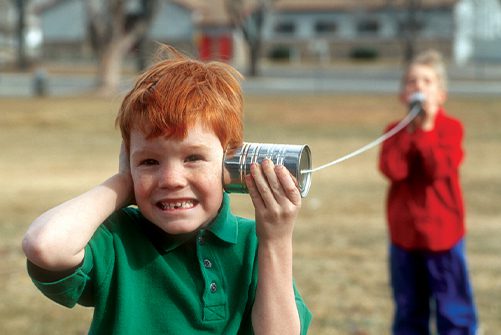
4 to 5 years
- Becomes more independent.
- Wants to fit in with others and understands gender.
- Draws a person with two to four body parts.
- Plays complicated make-believe games.
- May have imaginary friends.
- Invents characters during play that are experiencing scary, frustrating, or exciting situations.
- Has a better understanding of rules and complies more easily.

5 to 6 years
- Remembers full name, address, and sometimes phone number.
- Adapts to new environments with appropriate emotions and behaviors.
- Recognizes and names emotions.
- Follows simple rules, routines, and directions.
- Recognizes how actions affect others and accepts consequences.
- Expresses needs and becoming independent.
- May experience new emotions like shame and guilt.
- May play by themselves for up to 30 minutes.
- Getting better at telling the difference between what is “right” and “wrong.”