
You can download this resource HERE.
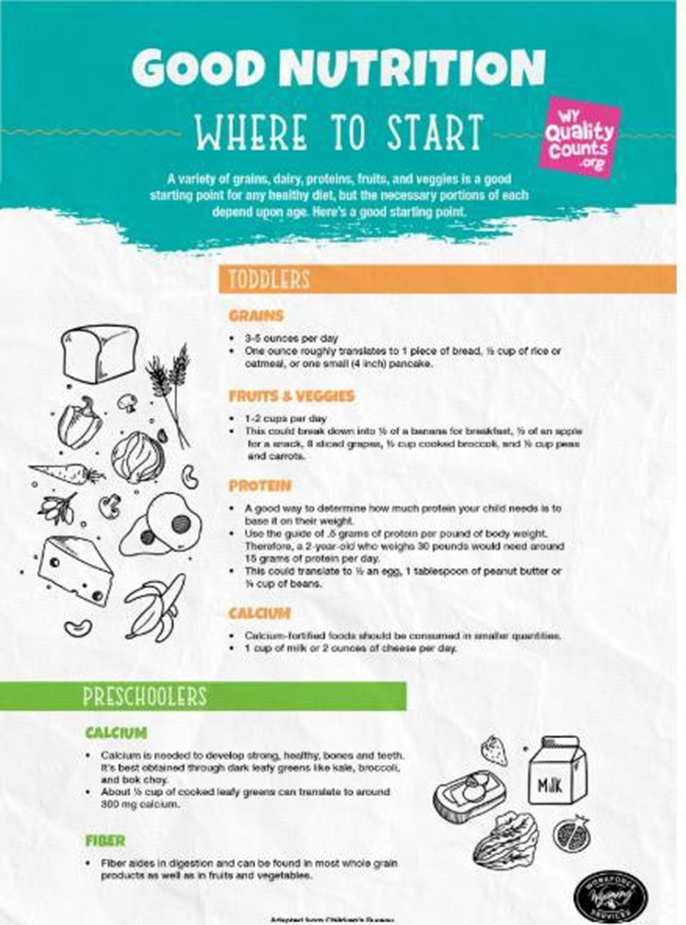
A variety of grains, dairy, proteins, fruits, and veggies is a good starting point for any healthy diet, but the necessary portions of each depend upon age. Here’s a good starting point.
Toddlers
Grains
- 3-5 ounces per day
- One ounce roughly translates to 1 piece of bread, ½ cup of rice or oatmeal, or one small (4 inch) pancake.
Fruits & Veggies
- 1-2 cups per day
- This could break down into ½ of a banana for breakfast, ½ of an apple for a snack, 8 sliced grapes, ½ cup cooked broccoli, and ½ cup peas and carrots.
Protein
- A good way to determine how much protein your child has is to base it on their weight.
- Use the guide of .5 grams of protein per pound of body weight. Therefore, a 2-year-old who weighs 30 pounds would need around 15 grams of protein per day.
- This could translate to ½ an egg, 1 tablespoon of peanut butter or ¼ cup of beans.
Calcium
- Calcium-fortified foods should be consumed in smaller quantities.
- 1 cup of milk or 2 ounces of cheese per day.
Preschoolers
If preschoolers eat a healthy selection of grains, protein, vegetables, fruits, and dairy, they will get what they need. However, kids this age do need to make sure to have calcium and fiber.
Calcium
- Calcium is needed to develop strong, healthy, bones and teeth. It’s best obtained through dark leafy greens like kale, broccoli, and bok choy.
- About ½ cup of cooked leafy greens can translate to around 300 mg calcium.
Fiber
- Fiber aids in digestion and can be found in most whole grain products as well as in fruits and vegetables.
Adapted from Children’s Bureau